



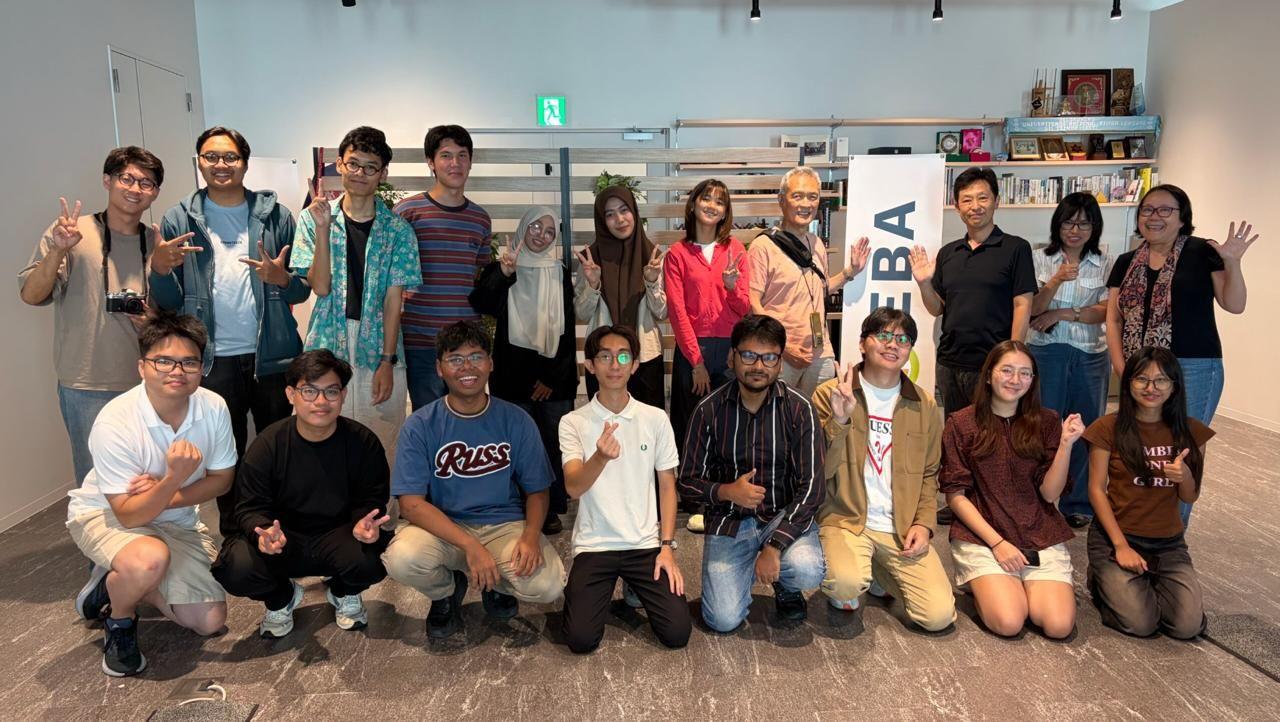
EBA Minamata Fieldwork 2026
5 Agustus 2026 • ~4 min read
From July 30 to August 5, 2026, Naufal Haris Rusyard, a member of the Information Centric Networking (ICN) Laboratory, participated in the EBA Minamata Fieldwork organized by SOI Asia and Keio University. The program brought together students from various universities and countries to learn from Minamata disease, a major case of industrial mercury pollution that affected public health, local livelihoods, social relationships, and community trust. Using an evidence-based approach, participants explored how such environmental disasters could be prevented and how affected communities could mitigate their impacts, recover, and become more resilient in the future.
Understanding the Evidence-Based Approach
During the program, participants learned and practiced the Evidence-Based Approach (EBA), which consists of four main processes:
- Data Collection: Gathering information through observation, discussion, interviews, and field exploration.
- Data Analysis: Identifying patterns, problems, and relationships within the collected evidence.
- Data Visualization: Presenting information in a form that is easier for others to understand.
- Storytelling: Connecting the evidence into a meaningful narrative that communicates the issue and its human impact.
Exploring Minamata through Digital Experiences
Due to an earthquake in Kumamoto, the planned visit to Minamata City was cancelled. The program was subsequently redesigned and continued in Tokyo through several activities:
- Exploring Minamata City through a virtual map and digital learning materials.
- Attending a lecture by Kobayashi-sensei about Minamata disease and its wider impacts.
- Viewing virtual reality footage to experience Minamata’s environment and history.
- Joining a focus group discussion titled “Environmental Disaster and How It Changes the Ways People Live.”
Learning from Field Observations in Tokyo
Participants also visited several locations, including:
- Haneda Airport, where participants examined how public infrastructure was designed to handle disasters and other disruptions. The airport had evacuation signs, safety facilities, wide corridors, and open spaces that could support movement during an emergency.
- The National Museum of Emerging Science and Innovation (Miraikan), where participants explored the role of science and technology in addressing social and environmental challenges.
- Tokyo Rinkai Disaster Prevention Park, which demonstrated how simulations, public education, and emergency facilities can help communities prepare for large-scale disasters.
From Field Evidence to Service Proposals
At the end of the program, all participants worked in groups to develop service proposals for cities facing human-made environmental disasters. Each group used its observations, discussions, and collected evidence to identify a problem and propose a possible solution.
One proposal was a Circular Economy Community, inspired by Meguro Eco Plaza and developed in response to waste accumulation at Bantargebang. The community would collect discarded items to be sorted, repaired, recycled, or transformed into useful products, reducing landfill waste while creating social and economic value.
“Not everything discarded is waste. Sometimes, it only needs care, repair, and a second chance.”
All proposals were presented during the final session at Keio University CCRC-Haneda Campus.
Overall, EBA Minamata Fieldwork 2026 demonstrated how field observations, community perspectives, and evidence can be transformed into meaningful service ideas. The program also showed that technology alone cannot solve environmental and social problems. Meaningful solutions must consider the people affected, the knowledge held by communities, and the collaboration required to build a more resilient future.
Written by
Naufal Haris
Signed on
2026-08-05