



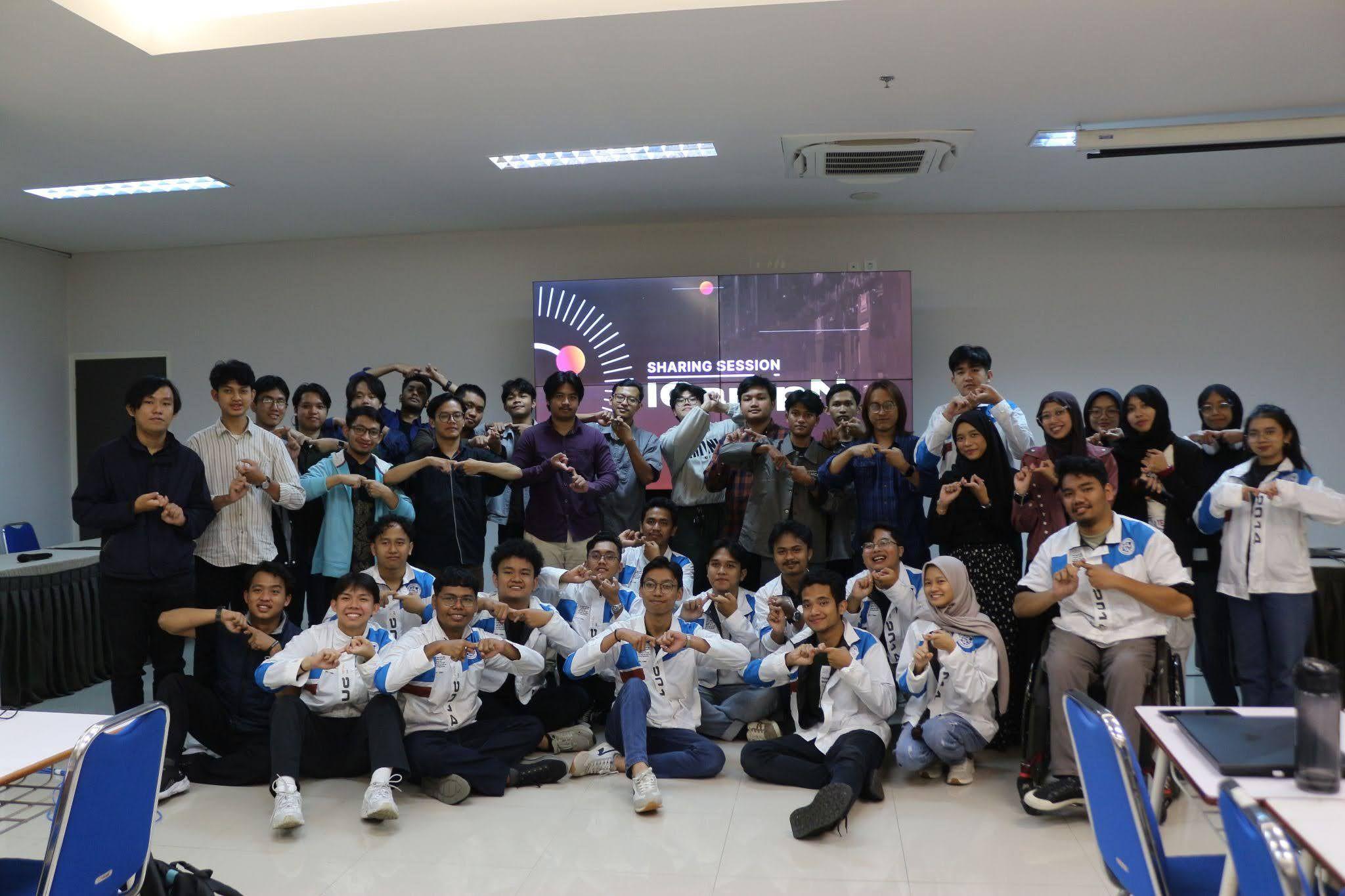
ICN Lab Sharing Session ICampN 2025
13 Mei 2025 • ~5 min read
The ICampN Sharing Session 2025 marked a significant milestone in collaborative technical learning at Information Centric Networking Laboratory (ICN Lab), taking place over two insightful days from May 10th to May 11th 2025 at GKM 4.1 FILKOM UB. The event gathered passionate students across various majors to explore network deployments, virtualization and implementation of real-world Internet of Things (IoT) solutions. Participants were divided into five groups, each consisting of four to five participants, and were guided by a dedicated teaching assistant. This event was guided by three experienced instructors: Virgananta Saputra, Akbar Fikri, and Archie Vian.
Day 1: Network Deployment
The first day kicked off with a fundamental, yet mandatory topic: Network Deployment. Led by Virgananta Saputra, the participants were introduced to practical networking concepts and exercises starting from UTP cable crimping to establish physical connections between devices. They then proceeded to assign IP addresses, configure routing protocols, and implement it on real devices such as routers, switches, and access points.
Participants also learned to configure NAT for internet access and set up DHCP so that devices could automatically obtain IP addresses through the network. The peak of this session required each group to successfully ping or access an external network, a crucial milestone that marked the completion of their self-built network infrastructure.
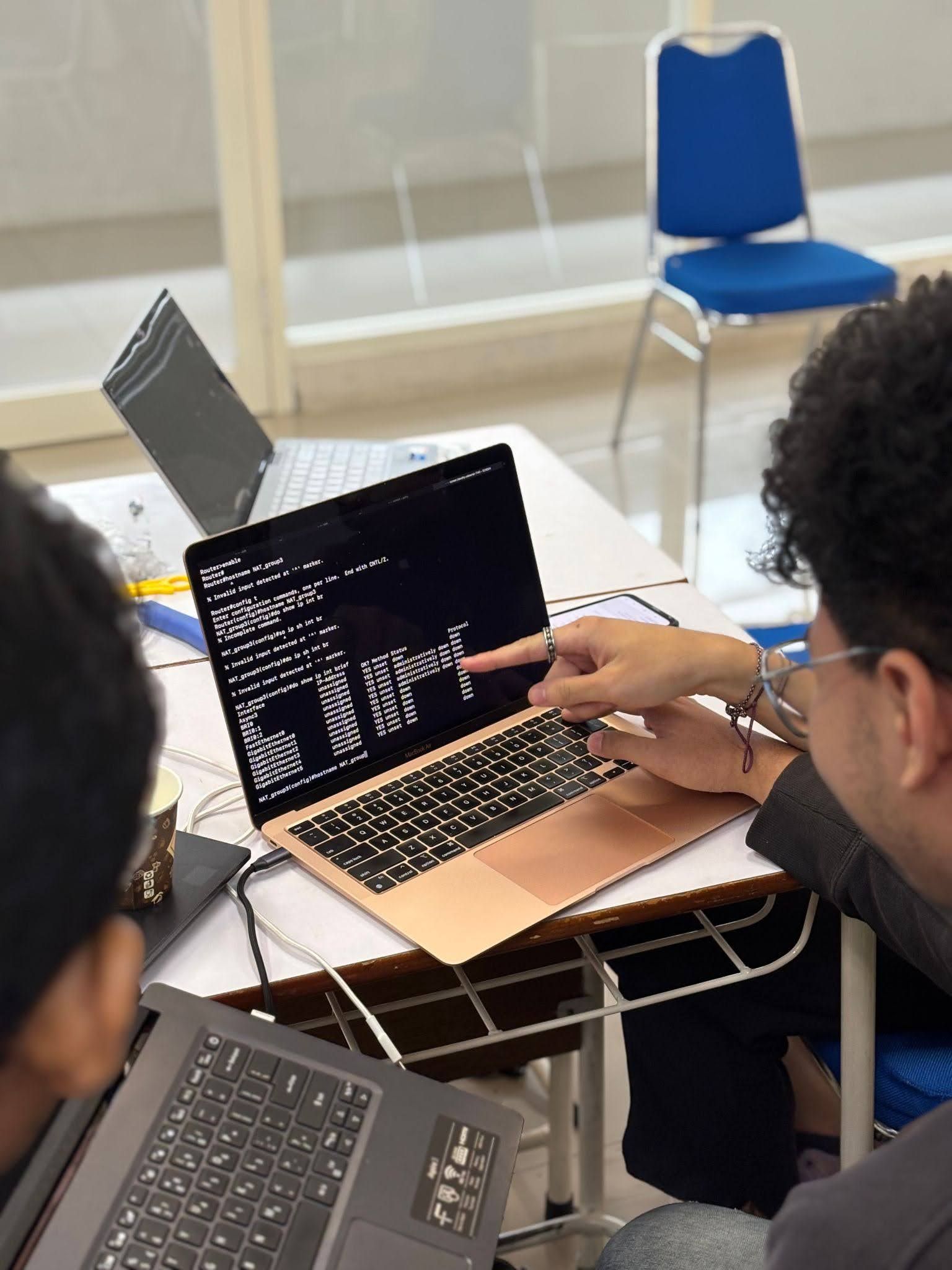
On the first day, they’re expected to understand and implement the following concepts.
- UTP Cable Crimping
- IP Addressing and Subnetting
- Virtual LAN (VLAN)
- Open Shortest Path First (OSPF) Routing
- Network Address Translation (NAT)
- Dynamic Host Configuration Protocol (DHCP)
- Access Point Configuration
While some groups faced initial challenges during configuration, with guidance from instructors and their assistants, every group succeeded in connecting to the internet by the end of the day, laying a strong foundation for the next session.
Day 2: Virtualization and IoT
The second day unfolded with Akbar Fikri taking the stage for an introduction to Virtualization. Each group created their own virtual machines (VM) using Proxmox, integrating their network from the previous day through VLAN configurations. This allowed their virtual systems to operate under the same network configured on the first day. Participants also practiced containerization by installing Node-RED and Mosquitto MQTT via docker, laying the groundwork for the IoT topic.
Transitioning into IoT, Archie Vian led the participants to understand the core concept of Iot, how devices connect, communicate, and transmit data. With this understanding, participants were introduced to Bluino Development Boards that are equipped with various sensors and actuators that are ready to be connected. With the help of Teaching Assistant, participants successfully make through the hands-on, building real-time data collections via MQTT, while Node-RED dashboards bring the information to life through intuitive visual flows.
The final hands-on session was designed to integrate all the knowledge and skills from previous hands-on. It began with network deployment, where IoT devices connect via the group’s configured access points, followed by virtualization, where Mosquitto MQTT (as the broker) and Node-RED (as the visualization platforms) were hosted on virtual machines.
At first, each group was guided to read data from a DHT (Digital Humidity and Temperature) sensor and visualize it on a Node-RED chart, which could be accessed from any device within their network. Once all groups understood how IoT, MQTT, and Node-RED orchestrated to create one connected system, they were challenged to create a useful IoT-based solution to address a real-life problem.
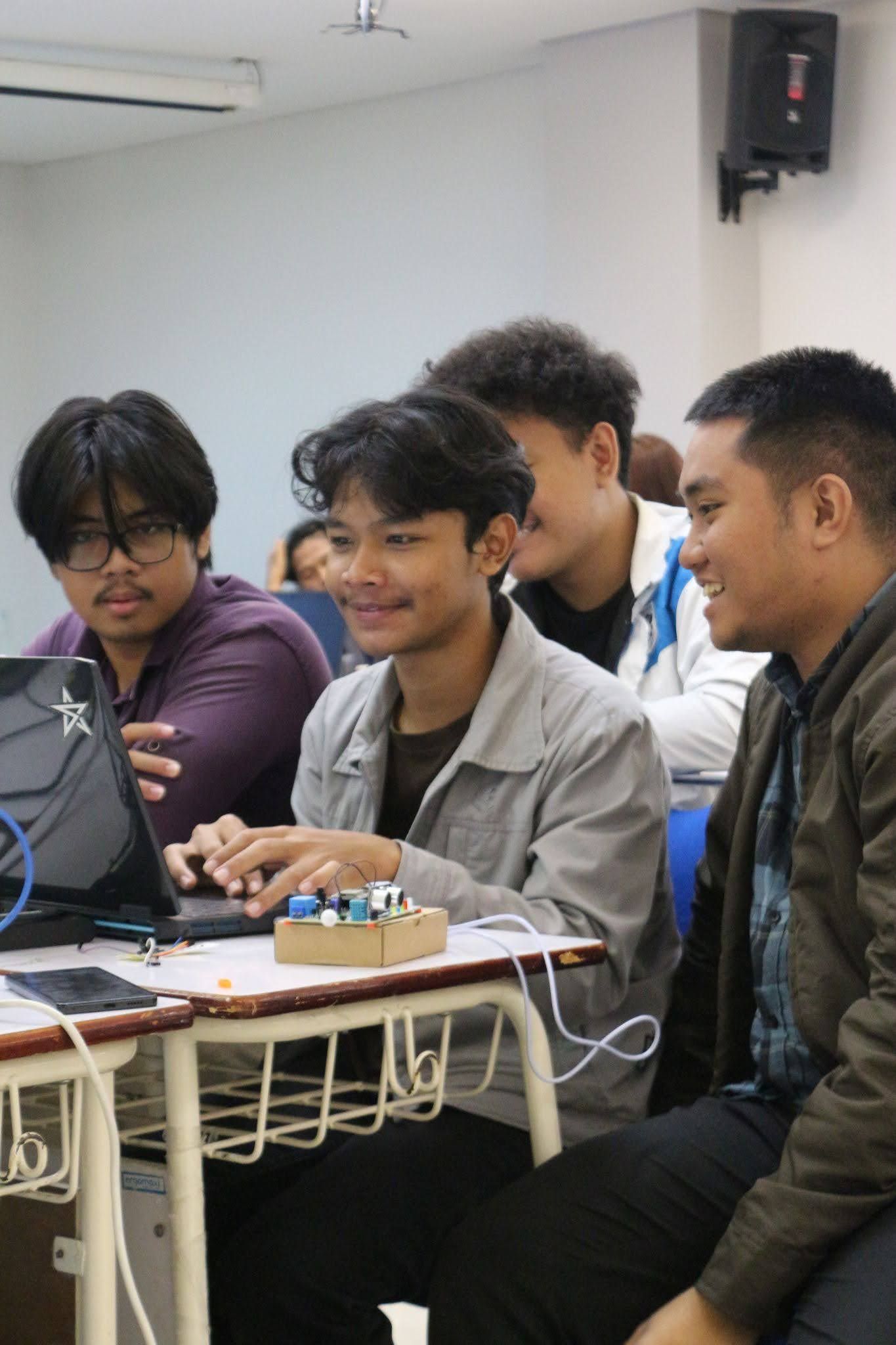
That’s where things start to get interesting. With the freedom to identify problems and build their own IoT-based solutions, groups devised impressive projects, including:
- Smart Torrent using Ultrasonic sensors
- Overload Detection on Trucks with gyroscope sensors
- Car Parking Systems using Ultrasonic sensors
- Smart Security Lamp using ultrasonic sensors
- And a Temperature Monitoring System.
What truly stood out here was the creativity and problem-solving spirit shown by the participants. Each group tackled unique problems. Even when using the same type of sensor, they applied it in entirely different ways to address different problems. This is exactly the kind of innovation we aim to foster. A simple solution, powered by just a few sensors and actuators, that can make a meaningful contribution in society. It was a clear demonstration of how technology, when placed in the hands of curious minds, can transform everyday issues into opportunities for smart solutions.
A Collaborative Spark
The ICampN Sharing Session proved to be more than just a sharing session. It was a collaborative spark, igniting curiosity, teamwork, and hands-on problem solving. Participants didn’t just follow instructions, they built, broke, debugged, and ultimately created. This two days experience embodies the spirit of applied learning that continues to grow within the walls of the Faculty of Computer Science.
For the majority of participants, this was their first time configuring real devices, despite having completed the computer networks course, which previously relied on simulations using tools like Cisco Packet Tracer or GNS3. For others, it was their first experience building IoT solutions and connecting them to actual networks. And for nearly everyone, this marked the first time they deployed a network, configured virtual machines, and implemented IoT systems in sequence, on real hardware.
From crimping cables to visualizing IoT data, ICampN 2025 delivered a full-cycle tech immersion that left a lasting impact on its attendees, setting the stage for future engineers, developers, and innovators.
Written by
Raditya Nala
Signed on
2025-05-13