



Pilot APIE Advanced Camp 2026
14 Februari 2026 • ~6 min read
Expanding Learning Pathways in BGP and Wi-Fi Engineering
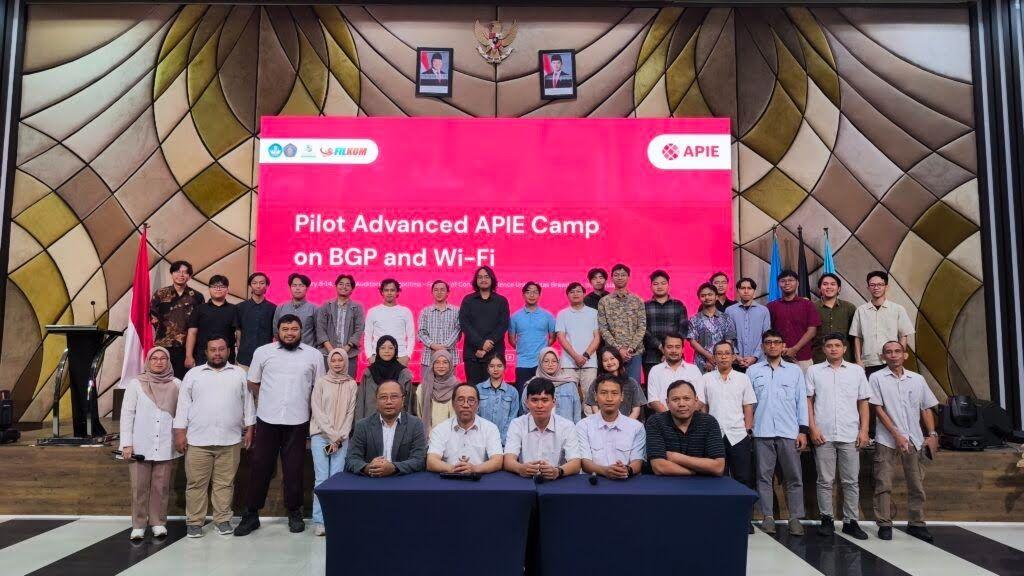
From January 8–10 and January 12–14, 2026, Universitas Brawijaya (UB) hosted the pilot edition of the APIE Advanced Camp at the Algoritma Auditorium, Faculty of Computer Science (FILKOM), in Malang, Indonesia.
The six-day program brought together participants for two intensive, hands-on technical tracks designed to deepen their operational skills and expand the APIE learning pathway. The first track focused on Border Gateway Protocol (BGP) and core Internet routing, while the second explored wireless engineering and Wi-Fi deployment.
Track 1: BGP and Core Internet Routing
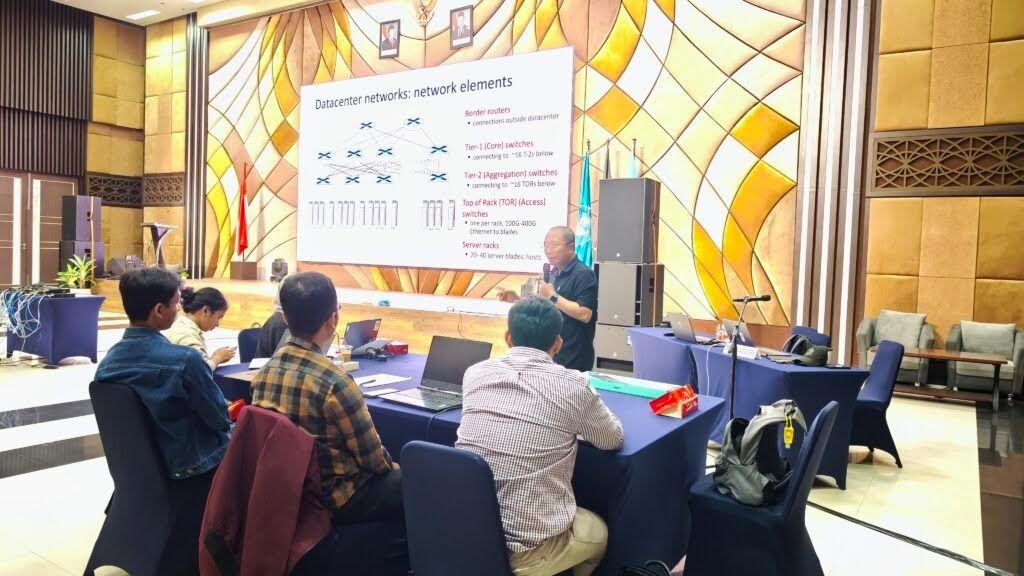
The first phase of the camp, held from January 8–10, focused on Border Gateway Protocol (BGP), one of the fundamental technologies supporting global Internet routing.
Participants explored:
- BGP fundamentals
- Complex iBGP and eBGP deployments
- Carrier-level troubleshooting scenarios
- Data Center routing using Mininet-IPLab
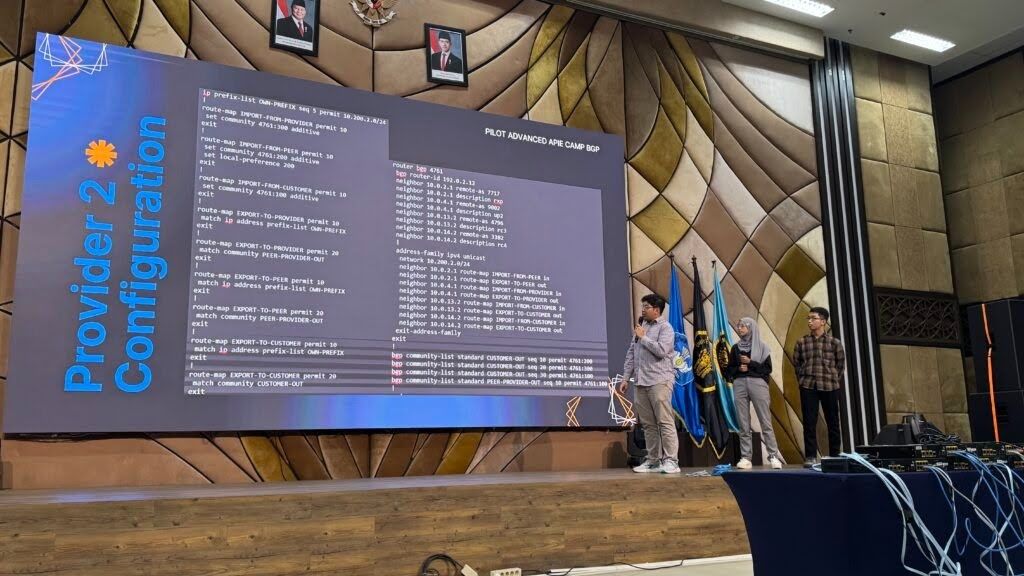
Through structured practical sessions, participants configured and tested their own routing policies while working through realistic Internet engineering challenges. The hands-on approach encouraged students to understand not only how BGP works, but also how routing policies influence network behavior in complex environments.
The track concluded with group presentations, where each team presented and defended its BGP policy designs and architectural decisions.
Watch the Pilot Advanced APIE Camp on BGP and Wi-Fi
By strengthening the BGP component within the Advanced Camp format, the program provides participants with a pathway from foundational Internet engineering concepts toward more advanced operational skills, routing policy design, and network architecture.
Track 2: Wireless Engineering and Wi-Fi Deployment
The second phase, held from January 12–14, shifted the focus from core Internet routing to the wireless edge.
Participants conducted active wireless site surveys, analyzed radio-frequency (RF) environments, and deployed both standalone and controller-based Wi-Fi Access Points. The sessions emphasized practical problem-solving, allowing participants to test, adjust, and troubleshoot wireless configurations in realistic scenarios.
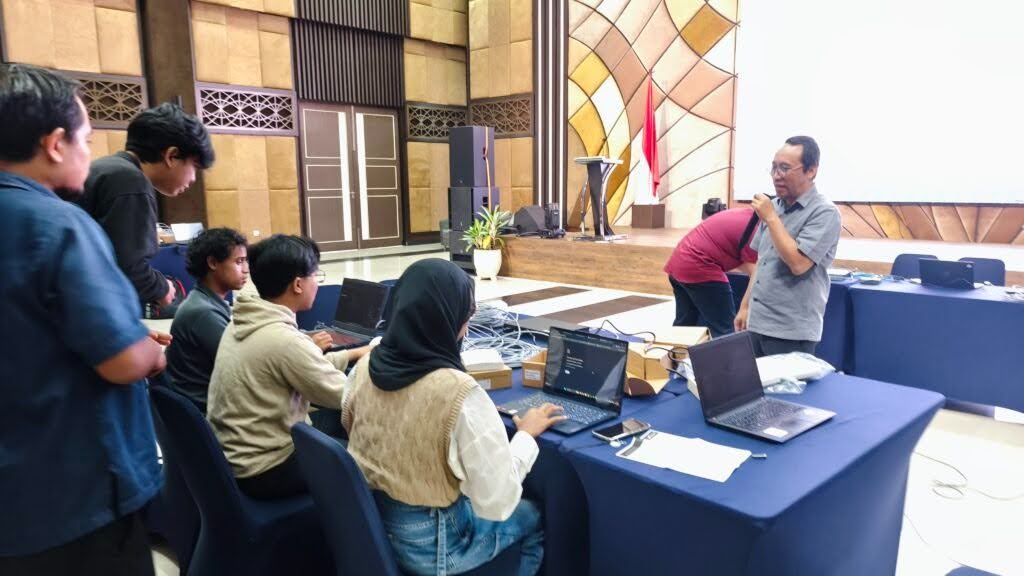
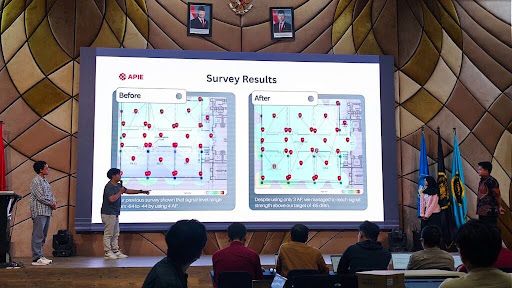
Similar to the BGP track, the wireless phase concluded with group presentations. Participants explained their network designs and defended the technical decisions they made throughout the deployment process.
This approach connected theoretical knowledge with practical network engineering, giving participants experience in analyzing an environment, designing an appropriate solution, deploying network infrastructure, and evaluating the resulting configuration.
Collaboration and Leadership
The pilot Advanced Camp was made possible through collaboration between institutions, technical teams, and supporting organizations.
We acknowledge:
- Prof. Achmad Husni Thamrin (Keio University) for advisory guidance
- Dr. Achmad Basuki for leading the program
- Dr. Kasyful Amron, Head of the ICN Lab, for technical coordination
- DTI UB for providing Wi-Fi hardware support
- ICN Lab Teaching Assistants for guiding participants throughout the laboratory sessions
The pilot Advanced Camp marks another step in expanding practice-oriented Internet engineering education at Universitas Brawijaya. By bringing together advanced routing and wireless engineering topics, the program gives learners opportunities to develop deeper technical specialization while strengthening collaboration within the APIE and SOI Asia network.
Through this initiative, UB continues to contribute to the development of hands-on Internet engineering education, preparing participants to approach increasingly complex challenges in modern network infrastructure.
Written by
Muhammad Atha Tsaqif
Signed on
2026-02-14