



Web-based Infrastructure and Service Development Training
26 Oktober 2024 • ~5 min read
This training aims to equip participants with practical knowledge and skills in developing infrastructure and web-based services, which serve as the backbone of many organizations and industries. Participants will gain comprehensive insights ranging from server management, virtualization, application containerization, to server monitoring.
Training Modules
1. Virtualization and Logical Volume Manager (LVM)
Learn hypervisor concepts such as VirtualBox and KVM, and implement LVM for flexible storage management, including snapshot techniques and configurations for physical volume (PV), volume group (VG), and logical volume (LV).
2. User and Group Management in Linux
This module covers creating, managing, and deleting users and groups on Linux-based systems to improve server efficiency and security.
3. Containerization with Docker
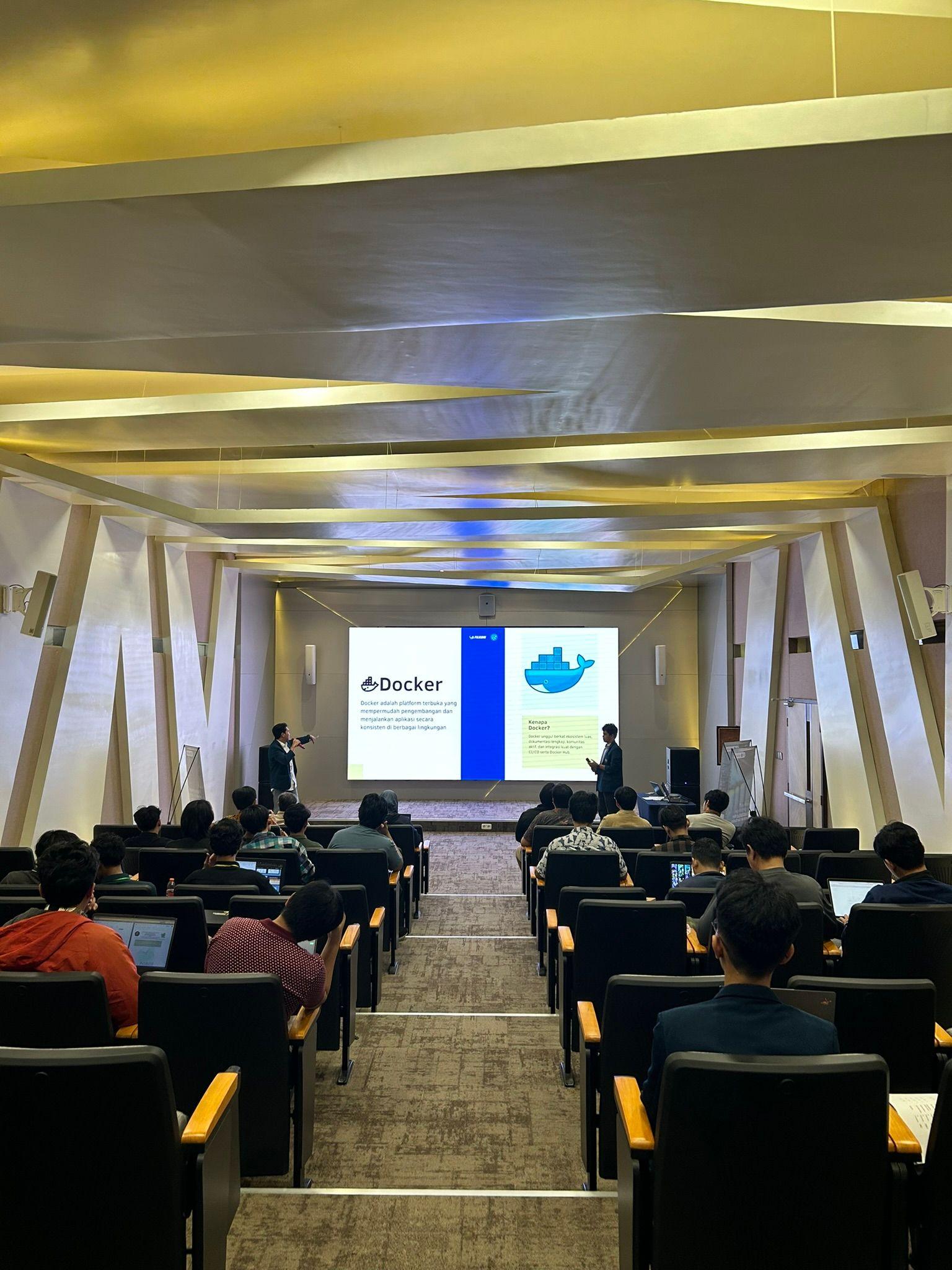
Participants will learn how to use Docker to create and manage applications in containers, as well as how to use Docker Compose and Docker Hub for efficient deployment.
4. Web and Database Server Deployment
This module includes the installation and configuration of web servers such as Nginx and Apache, as well as database servers like MySQL. It also introduces proxy server implementation to optimize application delivery.
5. DNS Server Configuration
Understand how DNS servers work and how to configure them using Bind9. Participants will also learn about DNS zones and network troubleshooting related to DNS.
6. Server Monitoring with Grafana and Prometheus
This module teaches real-time server monitoring using Prometheus and Grafana, helping participants understand server performance and resource utilization.
Training Objectives
After completing this training, participants are expected to:
- Manage servers and IT infrastructure more effectively
- Utilize virtualization and containerization for application deployment
- Configure web and database services optimally
- Apply monitoring techniques to ensure maximum service performance
Training Methods
This training combines theory and hands-on practice through real-world case studies. Participants will engage in discussions and solve common IT-related problems.
The sessions are delivered and demonstrated by Fauzan Ghaza Madani and Mirza Hilmi Shodiq.
Signed on
2024-10-26